
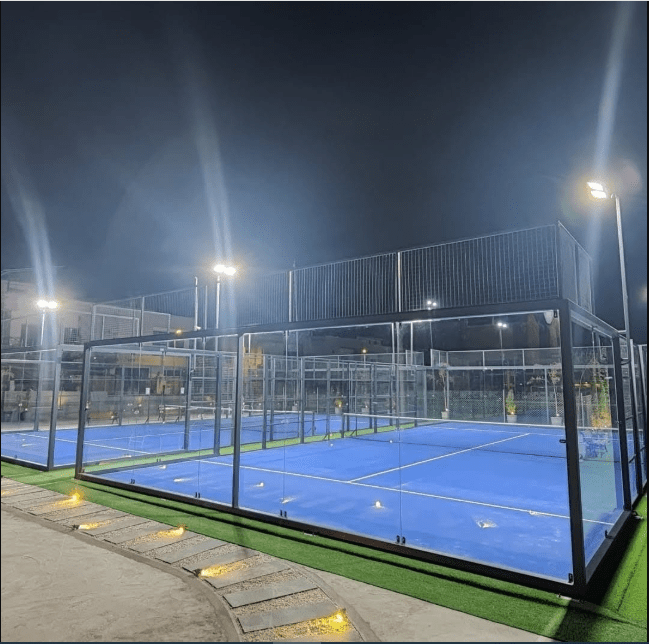
When you walk upon a padel playing field, the ground under one’s feet is the uncelebrated champion of each exciting exchange. For outside courts, this foundation must undertake a precise double role: it should be a reliable companion against relentless sunlight, driving rainfall, and sharp frost, while additionally providing the consistent, high-performance competition the sport requires. Selecting the right outdoor Padel Court Flooring isn’t just a building choice—it’s a dedication toward the quality of the game itself.
This guide breaks down the best choices to ensure your court stands up to the natural forces and elevates each match.
The Superior Standard: Man-Made Turf with Silica Sand filler
For expert tournaments and serious teams worldwide, the choice is unequivocal: manufactured turf with silica sand infill. This arrangement is the official surface of the World Padel Tour and the standard for elite play, and for valid reason.
Why it excels for performance and weather:
- Ideal Playability: It produces the ideal middle ground between ball bounce and athlete movement. The sand infill offers a reliable, medium-paced rebound, while offering excellent grip that still permits for a controlled slide. This mix is essential for the fast-paced, energetic nature of padel.
- Unmatched Weather Resistance: Modern man-made turf is crafted for the outdoors. Premium fibers are coated with UV stabilizers to resist discoloration and degradation from continuous sunlight exposure. More essentially, once installed over a correctly planned, permeable base, the whole system offers excellent drainage. Water passes through the turf and off from the playing area, preventing puddles and allowing game play to resume quickly after a heavy rain.
- Durability and Security: This surface can tolerate heavy, daily use. The sand infill adds softness, providing superior shock absorption than hard floors, which reduces player fatigue and pressure on joints over long matches.
Pro Tip: Not all artificial grass is made equal. For the best result, look for textured monofilament turf specifically designed for padel. These advanced fibers offer higher durability and more consistent ball reaction than older, fibrillated styles.
Other Viable Outdoor Flooring Options
Although man-made turf leads the pack, other surfaces are used successfully, everyone with a distinct set of advantages and compromises.
1. Acrylic (Painted) Surfaces
A frequent sight on many public courts, acrylic systems involve applying multiple coats of a rough, paint-like material over an asphalt or cement foundation.
- The Pros: They offer a very fast and reliable sphere bounce, need very low daily maintenance, and are frequently a lower-cost initial cost.
- The Compromise: The flooring is hard, providing minimal shock absorption, which can be tough on athlete’ legs and joints. In direct sun, it can additionally get extremely hot. Over time, it will need reapplying or restoring to preserve its color and playability.
2. Polyurethane (PU) Systems
Consider of this as a premium, padded upgrade to acrylic. PU is a joint less, elastic coating laid over a base.
- The Pros: This system offers outstanding impact absorption and player comfort, reducing tiredness. Its joint less nature makes it highly long lasting and superb for waterproofing.
- The Disadvantage: This comfort and function come at a higher initial price and require expert fitting. Like acrylic, it may require eventual recoating.
3. Modular Tiles (Interlocking Systems)
Typically made from polypropylene or blended substances, these tiles snap into place over a flat base.
- The Advantages: They include outstanding drainage through their design and provide good, reliably traction. Installation can be quicker, and individual broken pieces can be replaced.
- The Compromise: The game feel and ball rebound can differ clearly from the “standard” turf or acrylic floors. For purists seeking a classic padel experience, they may seem less genuine.
Tailoring Your Choice to the Climate
Your regional area climate should be a primary guide in your selection:
- For Hot & Sunny Climates: UV protection is essential. Make sure any artificial surface (turf, acrylic, PU) has strong UV-stability guarantees. Lighter-colored floors will also reflect warmth and stay cooler beneath the feet.
- For Wet & Rainy Climates: Drainage is king. Favor systems with natural drainage—either permeable artificial grass with a excellent base or modular tiles. A correctly engineered sub-base with the correct slope is just as critical as that surface itself.
- For Freezing & Freeze-Thaw Climates: Material flexibility is key. Floorings must withstand expansion and shrinking without splitting. Polyurethane setups and certain rubber-made options often excel here due to their flexibility.
The Base of it All: Installation & Maintenance
Including the best substance will fail if fitted badly. Expert installation is crucial, especially for ensuring the right slope (usually a 1% gradient) for drainage and a solid, uncompromising foundation.
Maintenance differs by type:
- Artificial Turf: Needs regular brushing to maintain fibers vertical and infill evenly distributed. Occasional top-ups of silica sand may be needed.
- Acrylic/PU Surfaces: Required frequent cleaning and occasional reapplying or resurfacing every few years to preserve texture and color.
- All Courts: Benefit from ensuring debris clear and inspecting for wear or harm after severe climatic events.
Frequently Asked Questions (FAQ)
Q: What is the authorized flooring employed in professional padel tournaments?
A: The formal and extremely common flooring for professional outdoor competitions, like the Global Padel Tour, is man-made turf with silica grit infill.
Q: How long does exterior padel court surface typically last?
A: With proper installation and maintenance, a high-quality man-made grass system can last 8-12 years. Acrylic surfaces might require resurfacing each 4-8 years, while durable polyurethane setups can too endure a decade or more.
Q: Can I install an outdoor padel playing field in an area with extremely heavy rainfall?
A: Absolutely. The crucial thing is putting in a system with excellent water runoff. This involves selecting permeable artificial grass alternative modular tiles paired with a skillfully made and angled stone composite sub-base that directs water away efficiently.
Q: Is man-made grass for padel the same as the grass employed for soccer or landscaping?
A: No. Padel turf is a specific material. It is typically shorter, denser, and created specifically to function with a sand infill to create the specific proper balance of ball rebound and foot grip for padel.